Classic ANZAC Biscuits Recipe (Chewy, Golden & Full of History)
Prep time: 15 minutes / Cook time: 15 minutes / Total time: 30 minutes / Makes: about 28 biscuits
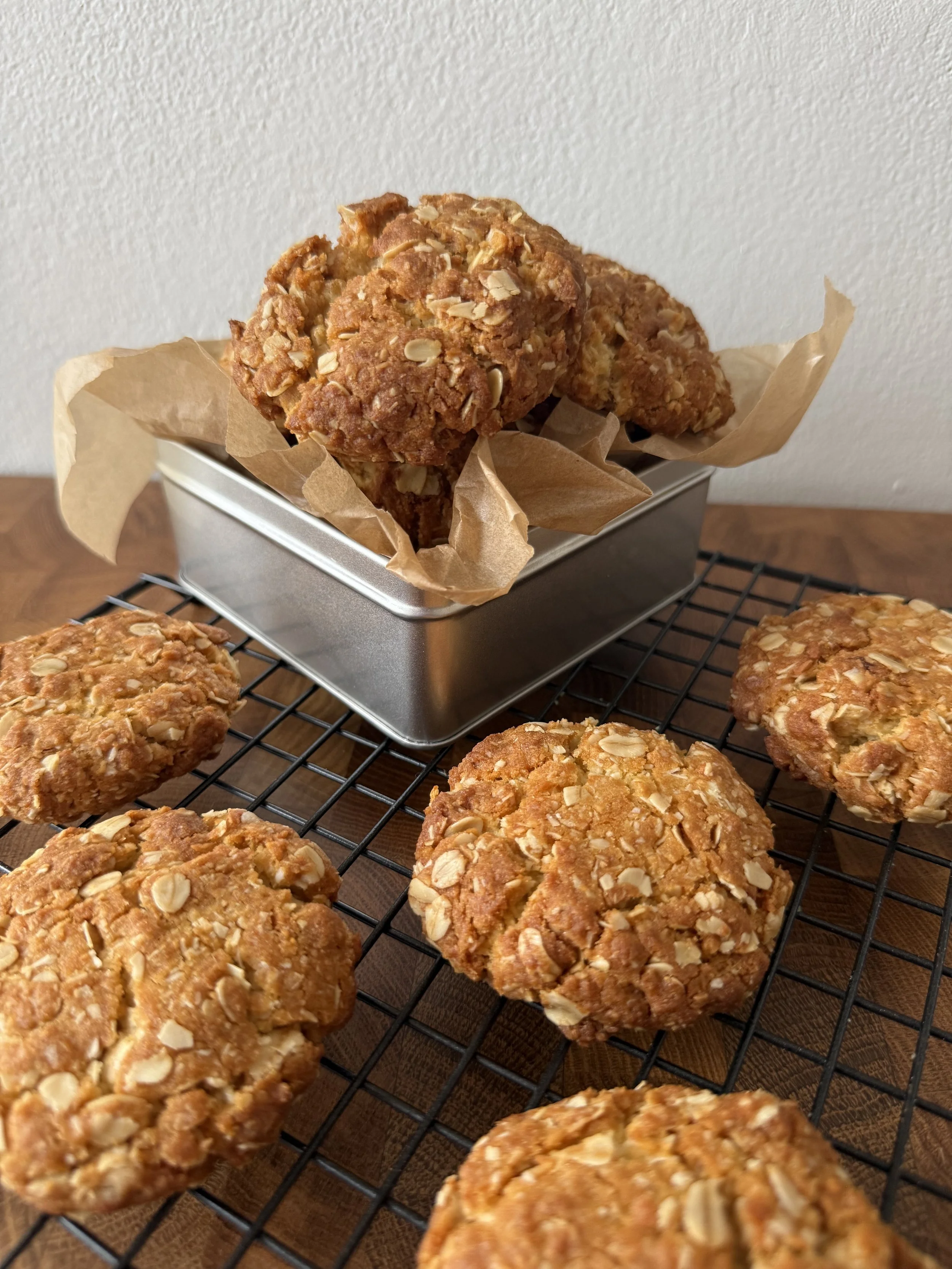
Few recipes carry as much history and meaning as a simple batch of ANZAC biscuits.
Sitting at home baking a tray of them, it's hard not to pause and think about what these humble biscuits once represented. During World War One, families and community groups across Australia and New Zealand baked and sent ANZAC biscuits to soldiers overseas. Made with ingredients that travelled well and kept for long periods, they became a small but meaningful reminder of home for many on the front line.
Today, the ANZAC biscuit remains one of Australia's most loved baking recipes. Simple, comforting, and deeply tied to our shared history, it's the kind of recipe that continues to appear in kitchens year after year.
At Elliot's Table, these are the kinds of recipes I love most. The ones that don't require fancy techniques or complicated ingredients — just a bowl, a tray, and a little time in the kitchen.
A Few Things to Know Before You Bake
Chewy or crunchy? This is the eternal ANZAC debate. The bake time is your control: 12 minutes gives you a softer, chewier biscuit, while 15 minutes produces something closer to the crunchier, golden style. Both are correct — it comes down to personal preference.
Smaller vs. larger biscuits: Rolling smaller balls gives you crunchier biscuits because they bake through more evenly. Larger balls stay softer and chewier in the centre. Keep this in mind and adjust based on what you're after.
The bicarb foam: When you stir the bicarbonate of soda into the hot butter mixture, it will foam up suddenly. This is completely normal, don't panic. That reaction is part of what gives ANZAC biscuits their signature texture.
Classic ANZAC Biscuits
Makes about 28 biscuits
Ingredients
Dry
180g rolled oats (2 cups)
150g plain flour (1 cup)
85g desiccated coconut (1 cup)
300g caster sugar (1½ cups)
1 tsp fine sea salt
1 tbsp bicarbonate of soda
Wet
270g unsalted butter
120g golden syrup
Method
1. Prepare the oven Preheat to 170°C fan (190°C conventional). Line two baking trays with baking paper.
2. Mix the dry ingredients In a large bowl, combine the rolled oats, plain flour, desiccated coconut, caster sugar, and salt. Mix well so everything is evenly distributed.
3. Melt the butter mixture In a medium saucepan over low-medium heat, melt the butter and golden syrup together, stirring until smooth and fully combined.
Remove from the heat. Stir the bicarbonate of soda into the hot butter mixture, it will foam up quickly. This is completely normal and is part of what gives the biscuits their texture.
4. Bring the dough together Pour the foaming butter mixture into the dry ingredients. Mix until everything is evenly coated and a soft dough forms. It will look crumbly at first — keep mixing and it will come together.
5. Shape the biscuits Roll level tablespoons of dough into balls and place onto the prepared trays, leaving about 5cm between each one as they spread.
Lightly flatten each ball with the palm of your hand.
6. Bake Bake for 12–15 minutes, until golden brown. For a chewier biscuit, pull them at 12 minutes. For a crunchier result, leave them to 15.
Leave them on the tray for 5 minutes before transferring to a wire rack, they'll be too soft to move straight from the oven.
As they cool, the edges will firm up while the centre stays beautifully chewy.
Elliot's Tip: Perfectly Round Biscuits Every Time
As soon as the biscuits come out of the oven (while they're still hot and pliable), place a round scone cutter slightly larger than each biscuit over the top and gently swirl it in a circular motion. The cutter corrals the biscuit back into a perfect circle. It takes about 10 seconds per biscuit and makes them look bakery-neat without any extra effort.
Three Ways to Twist the Classic
Once you've nailed the classic, these variations are a natural next step.
1. Dark Chocolate Dipped
Let the biscuits cool completely, then dip the base of each one into melted dark chocolate. Place chocolate-side-up on a tray lined with baking paper and leave to set. The bitterness of dark chocolate against the sweet, golden biscuit is a combination that disappears fast.
2. Orange & Macadamia
Add the finely grated zest of one large orange and 80g of roughly chopped roasted macadamias to the dry ingredients. The orange lifts the sweetness and the macadamias add a buttery crunch that feels distinctly Australian.
3. Salted Caramel Drizzle
Once cooled, drizzle the biscuits with store-bought or homemade salted caramel sauce and finish with a pinch of flaky sea salt. This works especially well for the larger, chewier style biscuits — the caramel pools slightly in the centre and sets into something that looks far more impressive than the effort required.
Storing Your ANZAC Biscuits
Store in an airtight tin or container at room temperature for up to two weeks. They actually improve after a day or two as the flavour deepens, if you can resist eating them all immediately.
Can you freeze them? Yes. Layer them between sheets of baking paper in an airtight container and freeze for up to three months. Thaw at room temperature for an hour before serving.
Frequently Asked Questions
Why did my biscuits spread too much? The most common cause is butter that was too hot when it was mixed into the dry ingredients. Let the butter mixture cool for a minute or two after adding the bicarb before mixing with the dry ingredients. Also make sure you're measuring your flour correctly, spoon it into the cup rather than scooping directly from the bag, which can pack in too much.
Why did my biscuits come out too hard? They were likely overbaked, or the dough was a little dry. Every oven runs slightly differently, start checking at the 11-minute mark if your oven tends to run hot. Remember, they firm up significantly as they cool, so pull them while the centre still looks slightly underdone.
Can I make ANZAC biscuits without golden syrup? Golden syrup is really worth tracking down, it gives a distinctive flavour that's hard to replicate. In a pinch, you can substitute with equal parts honey and treacle (or just honey), but the flavour will be noticeably different. Most major supermarkets carry golden syrup year-round.
Can I make these gluten free? Yes, with a couple of swaps. Replace the plain flour with a good-quality gluten free plain flour blend, and ensure your rolled oats are certified gluten free (oats are often processed in facilities that also handle wheat). The texture may be slightly more delicate, but the result is still delicious.
Is there an eggless version? Are ANZAC biscuits vegan? The original recipe contains no eggs, the golden syrup and butter mixture binds the dough. To make them vegan, swap the butter for a good-quality vegan butter block (not a spread). The result is very close to the original.
How do I know when they're done? Look for the edges to be golden brown and set, while the centre still looks slightly pale and soft. They'll firm up as they cool. If the entire biscuit looks golden and set in the oven, they'll be quite crunchy once cooled, which is fine if that's your preference.
If you make these, I'd love to see them, tag me on Instagram. And if you're looking for more easy, crowd-pleasing bakes, the Traybake and Chocolate sections are full of them.