Elliot's Tarte Tropézienne
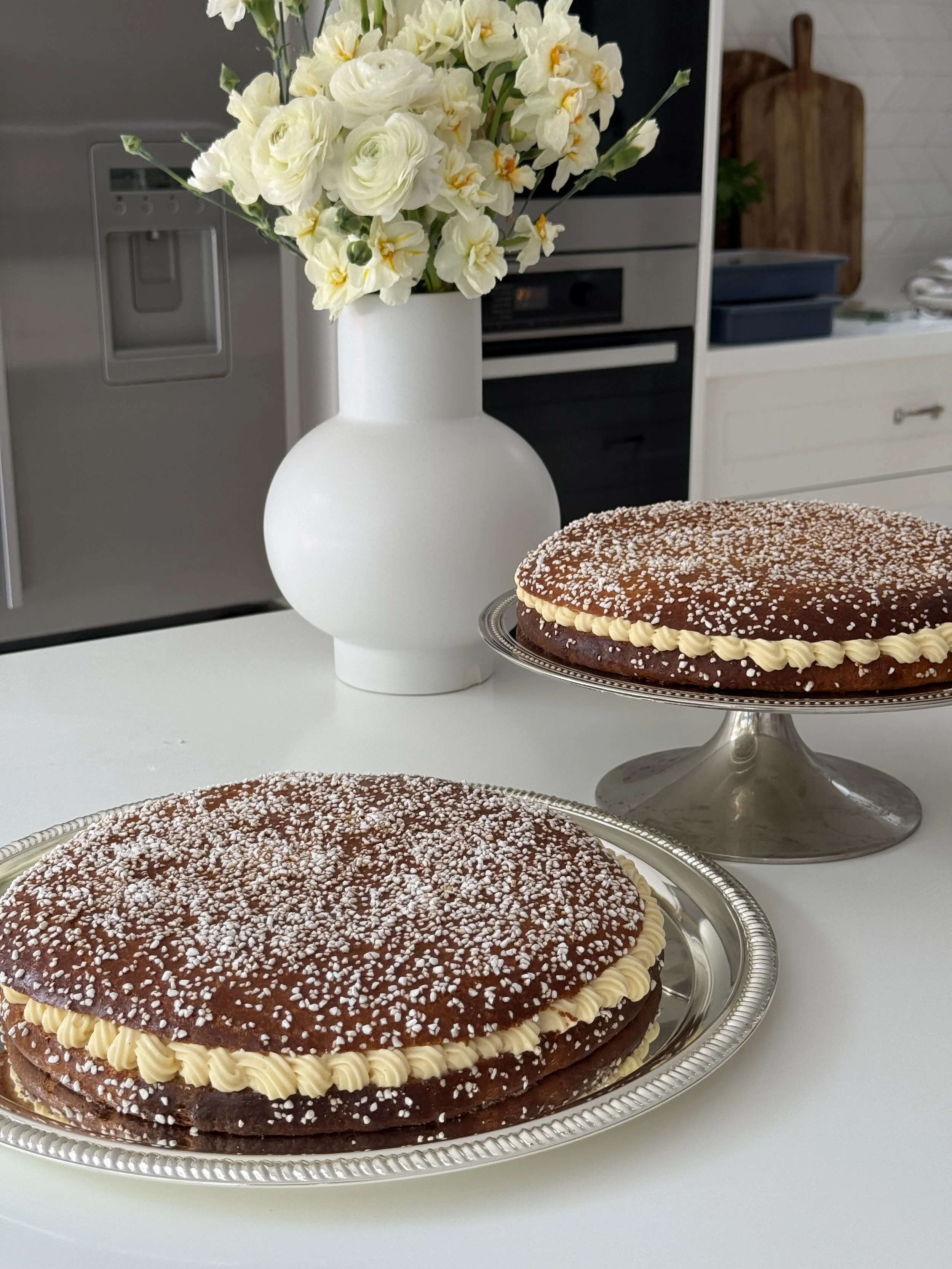
Earlier this year I was lucky enough to visit the South of France and it was everything, but one thing stood out above all the beautiful food I ate. The Tarte Tropézienne. A pillowy soft brioche filled with rich pastry cream, it is the kind of thing that stops you in your tracks at a patisserie window and then refuses to leave your mind until you've worked out how to make it at home.
This one takes a little time and love, but for a celebration bake it is absolutely worth every step.
Ingredients
For the Cake
7g active dry yeast
82g whole milk, warm
270g plain flour
40g caster sugar
2 large eggs, lightly beaten, at room temperature
1 tsp fine sea salt
1 tbsp vanilla extract
100g unsalted butter, softened
For the Filling
360g whole milk
4 large egg yolks
70g caster sugar
30g cornstarch
Pinch of fine sea salt
1 tbsp vanilla extract
90g unsalted butter, cut into small pieces, at room temperature
60g cold heavy cream
To Finish
1 large egg, lightly beaten
Pearl sugar or granulated sugar, to finish generously
Method
For the Cake
Pour the warm milk over the yeast in a small bowl and leave for a couple of minutes until fully dissolved.
Add the flour and sugar to the bowl of a stand mixer fitted with a paddle attachment and mix on low to combine. Add the yeast mixture and mix briefly until just distributed.
With the mixer on low, add the eggs in a slow stream, then add the salt and vanilla. Increase to medium speed and beat for 5-8 minutes, scraping down the bowl occasionally, until the dough is smooth and forms a ball.
With the mixer on medium-high, add the butter a few pieces at a time. Once all the butter is incorporated, continue mixing for 8-10 minutes until the dough is smooth and forms a ball around the paddle.
Turn the dough out into a large bowl. Cup your fingers under the dough and lift and slap it back down into the bowl, working your way around until you have a smooth, slightly flattened ball.
Cover tightly with plastic wrap and leave in a warm place for 2-3 hours until roughly doubled in size.
Deflate the dough using the same lift and slap method, cover tightly again and place in the freezer for 30 minutes, then transfer to the fridge and chill overnight.
For the Filling
Bring the milk to the boil in a medium saucepan.
In a bowl whisk together the egg yolks, sugar, cornstarch and salt. Whisking constantly, slowly pour in a quarter of the hot milk to temper the yolks, then add the rest in a steady stream.
Pour the mixture back into the saucepan and return to medium heat. Whisk vigorously until it comes back to the boil, then keep whisking for a further 1-2 minutes making sure to get into the corners of the pan.
Scrape into a bowl, add the vanilla and leave to sit for 10 minutes.
Add the butter a few pieces at a time, whisking well after each addition until smooth and glossy.
Press plastic wrap directly onto the surface of the cream and refrigerate for at least 2 hours or until fully chilled. The filling can be made up to 3 days ahead.
Shaping and Proving
Remove the dough from the fridge and turn out onto a lightly floured surface. Gently pat down, flour the top and roll into a circle roughly 25cm in diameter. Slide onto a lined baking tray.
Place in the oven set to 50°C and prove for 45-60 minutes until puffed and pillowy.
To Bake
Remove the dough from the oven and preheat to 200°C.
Brush the top of the dough generously with egg wash and sprinkle over a generous amount of pearl sugar or granulated sugar, patting it down lightly so it sticks.
Place in the oven and immediately reduce the temperature to 180°C. Bake for 20-25 minutes, rotating the tray after 10 minutes, until deep golden on top and bottom.
Transfer to a wire rack and allow to cool completely.
To Assemble
Whip the cold heavy cream to firm peaks.
Remove the pastry cream from the fridge and whisk to loosen. Fold in a little of the whipped cream to lighten it, then gently fold in the rest until smooth and airy.
Using a long serrated knife, carefully cut the cake horizontally in half. Aim for the bottom layer to be slightly thicker than the top.
Place the bottom layer on a serving plate and spread the filling generously over it, leaving a small border around the edge. Place the top layer back on and press gently to settle it into the cream.
Refrigerate for at least 1 hour and up to 8 hours before serving. This cake is best served cold.
Elliot's Tips
The lift and slap method sounds strange but works beautifully. It develops the gluten quickly and gives you a smooth, elastic dough without overworking it.
Don't rush the overnight chill. The cold slow prove develops the flavour of this dough significantly. It is worth the wait.
The oven prove at 50°C is the trick. A consistent gentle warmth gives the dough a perfect final prove without any risk of over-proofing. Keep an eye on it from 45 minutes.
Temper the eggs slowly. Adding the hot milk gradually to the yolks means you warm them gently rather than scrambling them. Take your time with this step.
Pearl sugar is the authentic finish. If you can find it, grab it. The Swedish store is a great shout. Granulated works well too and gives a lovely crunch.
This cake is best the day it is filled. The pastry cream can be made well ahead but once assembled, serve it the same day for the best texture and pastry.