The Yorkshire Pudding Plate
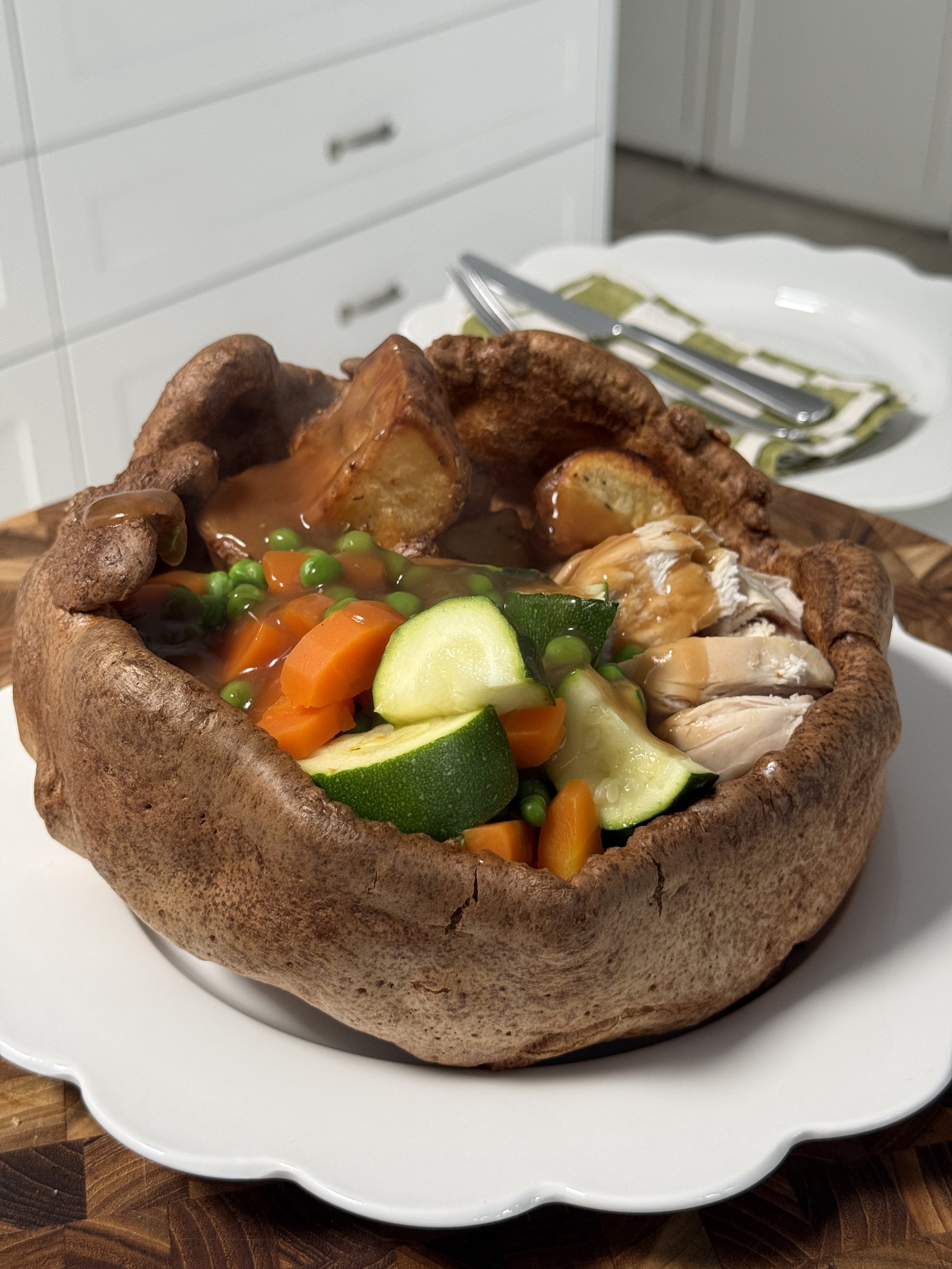
Serves: 2 | Makes 4 plates from 1 batch of base batter
This is the showstopper. The same Yorkshire pudding batter poured into a low-sided cake tin creates one giant Yorkshire pudding that acts as the plate itself, then you fill it with a full roast dinner. Four plates from one batch makes this a genuinely practical centrepiece for 4. Feeding a crowd? Make the pudding plates in advance and reheat in the oven at 180°C for 8 minutes before filling and serving.
Equipment
1 x 20-22cm low-sided round cake tin or shallow roasting tin per plate
Ingredients
1 x Classic Yorkshire Pudding batter (see recipe)
Per plate:
1 tbsp neutral oil, such as sunflower or vegetable
Sliced roast beef or chicken
Roast potatoes
Seasonal vegetables such as carrots, green beans or peas
Rich gravy, to pour at the table
Method
Preheat your oven to 210°C fan. Pour 1 tbsp of oil into each cake tin and place both in the oven to heat for at least 8-10 minutes until smoking hot.
Remove from the oven and pour the batter evenly between the two tins, it should sizzle dramatically on contact.
Return immediately to the oven and bake for 25-30 minutes until the sides have risen tall and are deeply golden. The centre will stay lower, forming a natural bowl to hold your filling.
Do not open the oven door during baking.
Have all your roast components ready and warm before the puddings come out. Remove from the tins, place on boards or large plates and fill generously with meat, vegetables and roast potatoes. Pour over plenty of gravy at the table and serve immediately.
Elliot's Tips
Get everything ready before the puddings come out. Assembly needs to be fast, you want to serve them while they're still crisp and steaming. A cold filling in a hot pudding is a missed opportunity.
Gravy goes on at the very last second, at the table. Pouring it too early will soften the base. You want that contrast of crispy pudding and rich gravy in every bite.
This works beautifully with leftover roast dinner components. The pudding plate makes even simple leftovers feel like a proper Sunday spread.
The higher temperature is intentional. The extra heat compared to the classic puddings gives the larger surface area the power it needs to rise tall and hold that bowl shape.